The Government plans to publish the revised national curriculum in spring 2027, ahead of first teaching in September 2028.
Although the final programmes of study are still being developed, schools are being encouraged to provide a broader education with greater emphasis on enrichment, physical activity, outdoor and adventurous experiences, oracy, citizenship and wider life skills.
The Government’s enrichment expectations include five areas:
- civic engagement
- arts and culture
- nature, outdoor and adventure
- sport and physical activity
- wider life and future skills
For primary schools, this is an opportunity to make outdoor learning a planned and inclusive part of everyday education.
What Do the Changes Mean?
The Government’s curriculum reform announcement highlights improved access to nature, adventure, sport and physical activity.
Outdoor learning is not becoming a separate subject. Instead, it can help schools connect the new priorities across PE, science, geography, English, maths and personal development.
The new enrichment benchmarks also state that every pupil should be able to access nature, outdoor and adventurous experiences.
This means schools need to consider whether opportunities are available across all year groups—not only through clubs, residentials or occasional outdoor days.
How Can Schools Prepare?
Schools do not need to wait for the final curriculum before taking action. Here are five practical ways to prepare.
1. Review Current Provision
Begin by identifying what already happens across the school:
- Which subjects are taught outdoors?
- How is OAA delivered within PE?
- Which year groups participate most often?
- Can pupils with SEND participate fully?
- How is participation recorded?
Many schools will find that outdoor learning already happens but is not planned or measured consistently.
2. Strengthen OAA and Orienteering
Outdoor and adventurous activity already forms part of the PE National Curriculum.
Orienteering provides a practical way to develop OAA while supporting geography, maths, teamwork and problem-solving. Pupils can learn to read maps, follow routes, use direction and make decisions between checkpoints.
British Orienteering provides further information about developing orienteering in schools.
3. Make Outdoor Learning Cross-Curricular
Outdoor learning is most valuable when it supports clear curriculum outcomes.
Schools could use their grounds for:
- measuring distances and angles in maths
- investigating habitats in science
- developing map skills in geography
- gathering descriptive vocabulary in English
- exploring sustainability through citizenship
- building oracy through team challenges
The aim is not to take every lesson outside. It is to identify where active, practical experiences improve learning.
4. Build Staff Confidence
Teachers need activities that are manageable, purposeful and easy to deliver.
The Outdoor Classroom combines curriculum learning, physical activity and orienteering. Teachers can use ready-made activities or create their own questions, while pupils navigate between checkpoints around their school grounds.
Automatic course planning and digital reporting also reduce the need for printed worksheets, manual scoring and additional administration.
5. Record Participation and Impact
The enrichment benchmarks place importance on access, participation and outcomes.
Schools can record:
- how many pupils participate
- which year groups take part
- subjects delivered outdoors
- hours of physical activity
- pupil and staff feedback
- engagement among pupils with SEND
This evidence can support curriculum reviews, governor reports, PE and Sport Premium evaluation and the School Development Plan.
Making Outdoor Learning Inclusive
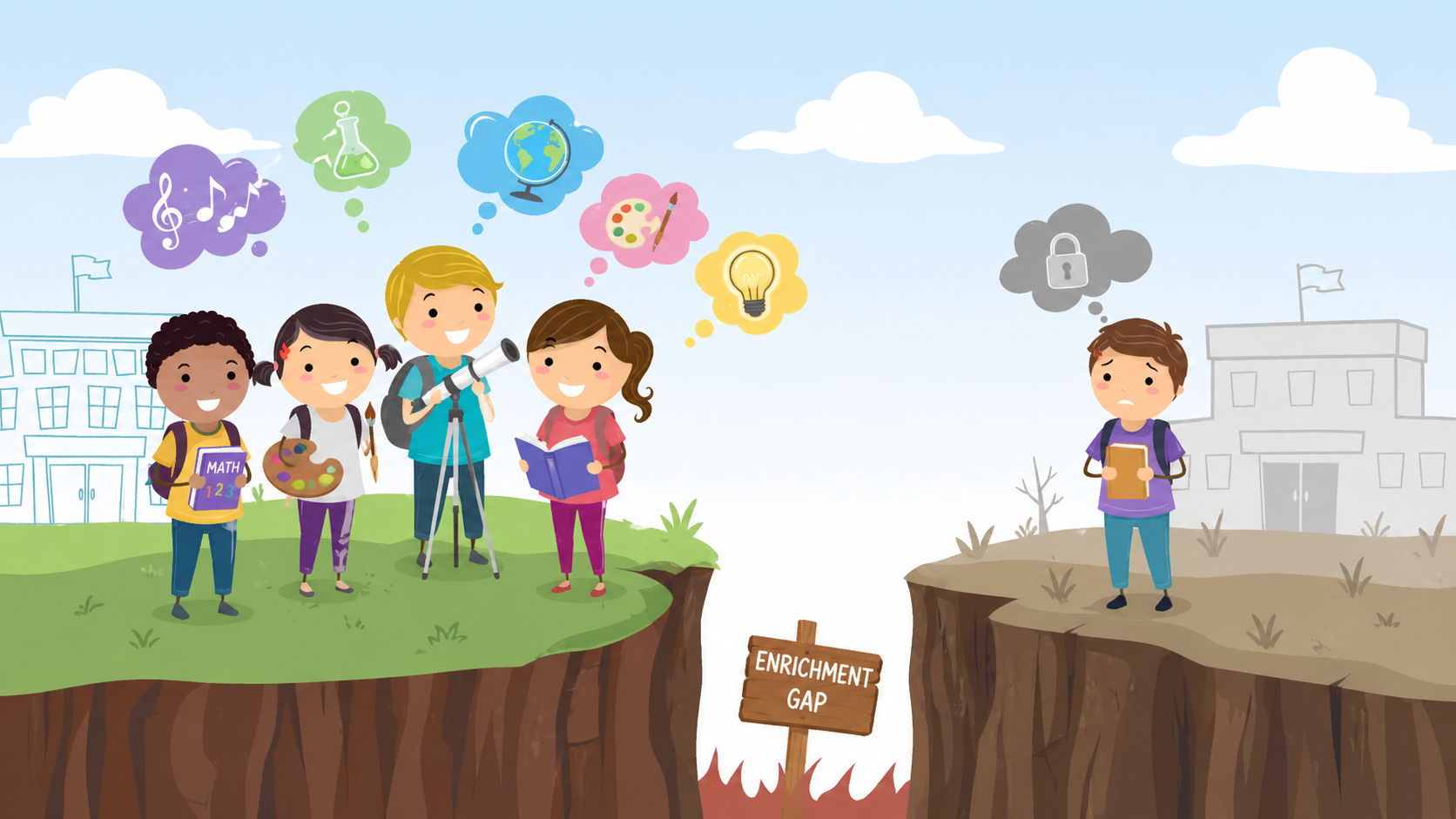
Outdoor learning should be accessible to every pupil, including those who are disadvantaged or have SEND.
Schools can support inclusion by offering different challenge levels, choosing accessible routes, using team activities and providing visual, written or audio instructions.
Embedding opportunities within curriculum time also helps ensure participation is not restricted to pupils who can attend paid clubs or trips.
Preparing for What Comes Next
The revised curriculum will not be taught until September 2028, but preparation starts now.
By reviewing existing provision, strengthening OAA, supporting staff and collecting evidence, schools can enter 2027 with a clear understanding of what is already working and what needs to improve.
The Outdoor Classroom provides the maps, activities and reporting tools schools need to embed active outdoor learning across the curriculum.
Create a free teacher account and start preparing your school today.